+998 91 555 0089
[email protected]

Absolutely everyone knows about the valor, courage and glory of Amir Temur. But few people know that the famous governor loved nature: trees, flowers, singing birds. You can learn about this by reading his sayings, in which he talks about the benefits of nature, improvement of desert lands, development of agriculture, which he left as a legacy to his descendants.
“… I ordered everyone to build in every city mosques, madrassas, baths, caravanserais for travelers, bridges over rivers. Whoever decides to equip some desert place, or create a garden or take advantage of some abandoned place, he will not pay a tribute for the first two years, only starting from the third year, you can demand a tribute from him by the law.
In those days, a special irrigation system was invented in Maveranahr, in particular in Zarafshan, fields for sowing agricultural products were expanded. Cleaned cemeteries and holy pilgrimage sites.
A canal called Eski Anchor (old river) was built in honor of the victory of Amir Temur over Sultan Bayazid. According to the records of the historian Hafiz Abru, you can find out that Amir Temur, seeing the deplorable conditions of life of the Mugrob valley in Khorasan, ordered to dig 20 small rivers from the big river and helped to the inhabitants of the valley to arrange their life. By his order, bridges over the rivers Kuhak – Zarafshan, Amu Darya and Sirdarya were built. The channels of Syrdarya and Ohangaran were also dug. Irrigation works of Bukhara, Samarkand, Shakhrisabz and Fergana were carried out. This kind of landscaping work was done in other areas too. By the order of Amir Temur, even in the mountains, in particular in Azerbaijan, in the area of Korabog was built a 42-kilometer canal. In the city of Mugon were created 12 gardens.
For the gardens of Amir were chosen peculiar names. These names can be found in historical records, literary works and in the diaries of travelers. Also, their images were in miniature works of the Middle Ages. Gardens in their appearance were divided into two types.
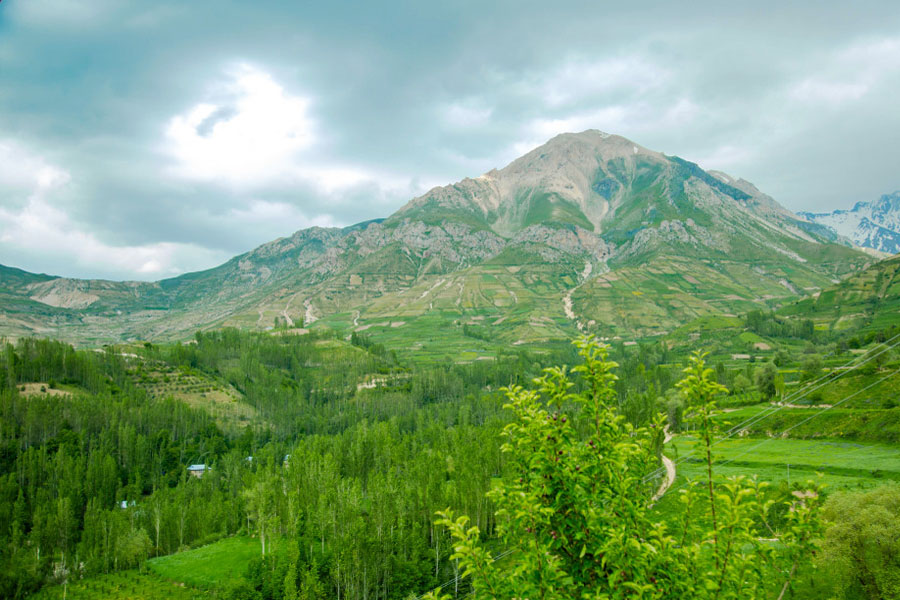
Chorbog – from the Persian “chor” – four “god” – a garden. These were geometric gardens with a quadrangular shape, each side of which was approximately 1 km. The rivers passing inside the garden divided it into equal four parts. Minarets were built around the edges and a palace stood in the center. Gates of such a garden were built in the direction of the city.
Gardens that were not geometric shapes created in nature. Such gardens were created so that, the overlord could hunt there and the main part was preserved in its natural form. Only in a small part were built small palaces and tents for recreation. Lakes were dug there and fountains were built. In such places, it was possible to meet a variety of flora and fauna.
The most beautiful and famous, among the gardens created by Amir Temur are the following:
Bogi Baland – (tall garden) was built in the northern part of Samarkand near the Chupon Ota mosque (the territory of the current airport). It was built specifically for the granddaughter (daughter of Mironshokh). The construction was attended by the famous gardeners of Azerbaijan, Iran and other countries. In the center of the garden, there was a luxurious palace made of Tabriz white marble. The palace was surrounded by vineyards, apple trees and fig trees.
Bogi Bekhisht. It was located in the west of Samarkand and was built in 1378 in honor of the wife of Amir Temur Khairiniso. According to some reports, this garden was also called “ bogi jannat” (Jannat is paradise, that is, the Garden of Eden). In the middle of the garden, there was a hill, at the edges of which a large pit was dug. On a hill stood a palace of white marble. One could go there on suspension bridges. In one part of the garden, there was a zoo where you could see many rare animals.
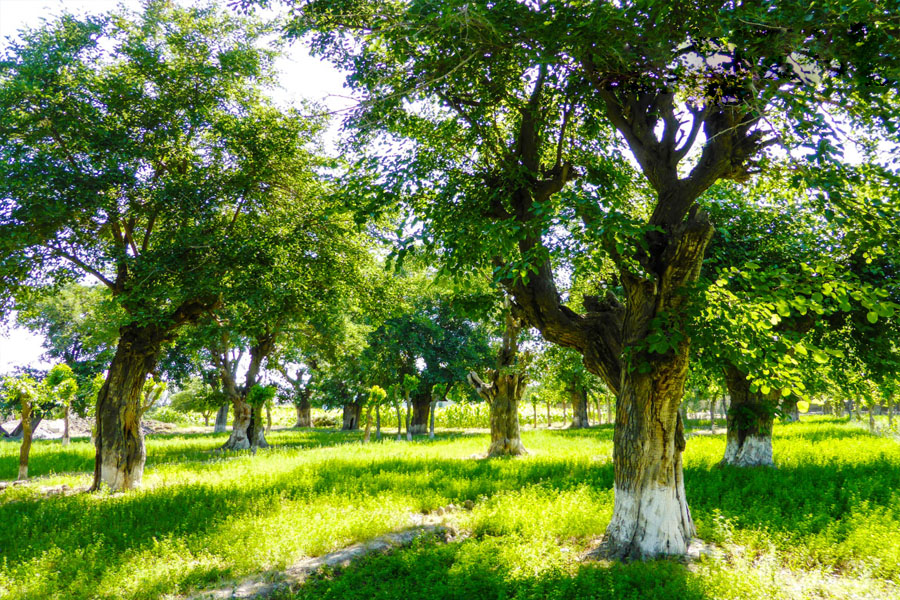
Davlatobod. This garden was 13 km far from Samarkand. Amir Temur rested in this garden after successful trips, received foreign ambassadors there. There were irrigation ditches, four lakes and a palace. The palace was built on an artificial hill, along the edges of which there was a pit. The palace was visited by two suspension bridges.
Bogi Dilkusho – (a garden in which the soul rests). Built in honor of the wife of Tukalhonim in 1397. The garden was located 5 kilometers from the city on the right side of Penjikentskaya street. It was surrounded by a high clay fence, each side 900 meters long. On all four sides of the garden, there were beautiful gates. In the center of the garden, there was a magnificent palace, which consisted of three floors and fountains played on each floor. The walls were decorated with episodes from Sahibkiran’s campaigns. At the site of this garden, today is the village of Dilkusho.
Bogi Jakhonoma – (mirror of the world). It was built 42 kilometers far from Samarkand at the foot of Zarafshan Mountain. (approximately in the area of Urgut). There were a palace and a fortress. The garden was so large that one day a horse from the stable was lost, which was found six months later.
Bogi Maydon– was located in the northern part of Samarkand at the foot of Mount Chuponota. According to historical data, there was a huge terrace in the garden, on which stood a throne, decorated with precious stones. After the death of Amir Temur, his grandson Mirzo Ulugbek cared for the garden. The place where this garden used to be, is still called Bogi maydon.
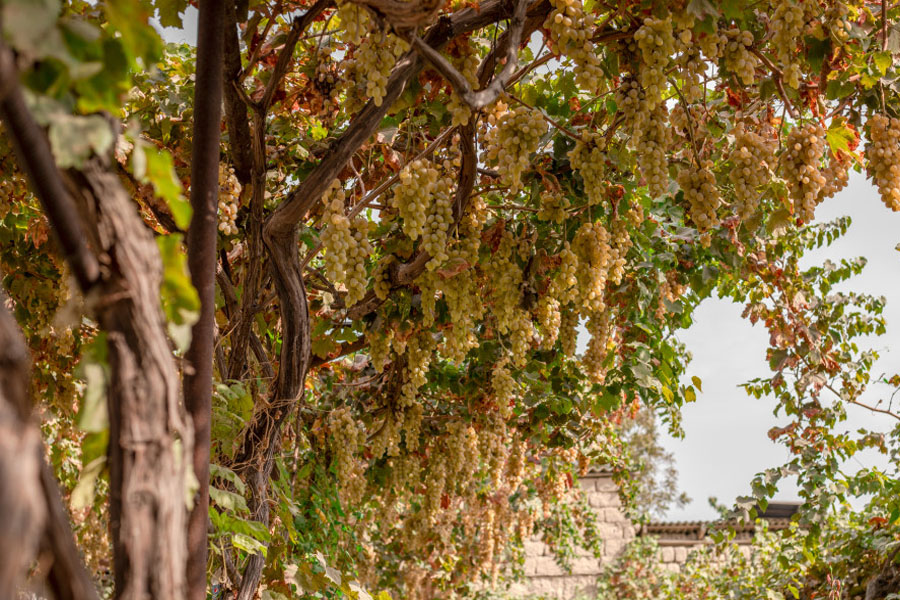
Nav– (New Garden) this garden was built by the order of Amir Temur in the southern part of Samarkand, in 1404. It was located on the site of the present village of Lolazor. Like the garden Bogi Dilkusho, it was surrounded on four sides by a clay fence. In every corner, there was a fortress. In the center, there was a palace, which was much larger in size than other gardens. Near the palace, there was a large lake.
Bogi Chinor. This garden was located in the village of Konigil, where the famous Samarkand paper is still produced these days. There you could admire the view of the beautiful chinar- plane trees (perennial tree). In the center of the garden, there was a palace, like in other gardens.
Bogi Shamol – This garden was built in honor of the granddaughter (Daughters of Mironshokh) in 1397. The garden was located in the western part of Samarkand. The palace in the garden was quadrangular in the shape and each side was 1,500 steps. The walls were made of marble, and the residential part was decorated with ebony and ivory. The territory of the garden and the river flowing from there are still called Bagi shamol.
But this, of course, is not all. If you list all the gardens and palaces of Amir Temur, then this will be a whole book. We can only list their names, which in their beauty were not inferior to each other. These are the following gardens: Chunonchi, Bogi Buldu, Bogi Zagan, Bogi Nakshi Jahon (garden, decoration of light), Bogi Amirzoda Shohrukh, Bogcha, Bogi Dilafruz, Bogi Sheroi, Lugbog, Lolazor, Bedana Kurgi, Chumchuklik, Gozkhona and many others.