+998 91 555 0089
[email protected]

A national drink is a distinct beverage that is strongly associated with a particular country and can be part of their national identity and self-image.
“Kuk Choy-Bek Choy” so popularly called green tea, which is considered as a drink of aristocrats. There are a lot of legends and myths about the occurrence of green tea. One of the legends tells that even before our era, the Chinese Emperor Chen Nung, walking in nature sat down to rest under a bush and his servants laid a table for him there. When the ruler started to eat, in tableware in which was hot water fell a couple of leaves from a shrub, under which he sat down. The water had changed its color and became a greenish-red color. This event greatly interested the Emperor that he decided to taste it, taking a sip and feeling the taste in his mouth. He was very surprised at the pleasant taste and aroma of this drink. He ordered to gather the leaves from the shrub, dry them and use it as a drink.
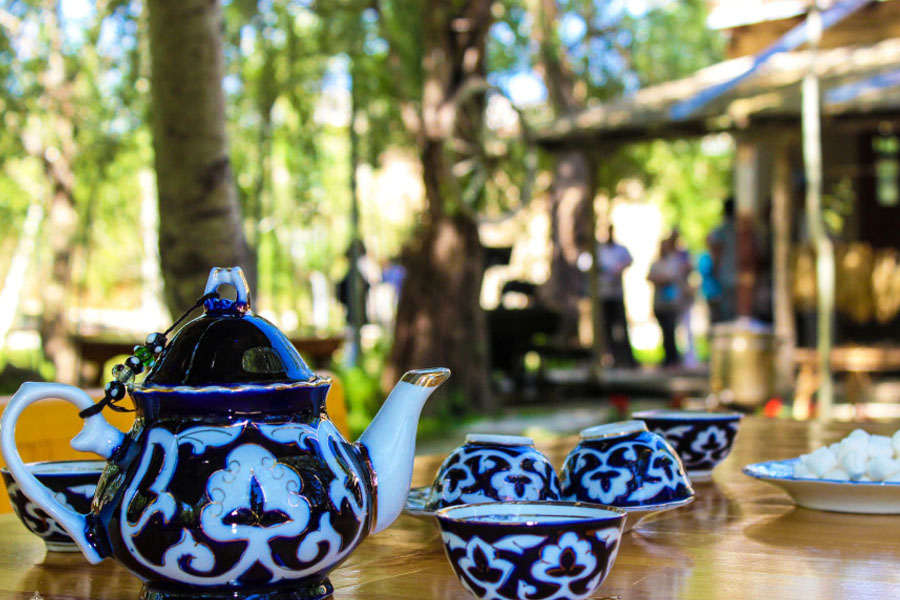
Uzbek cuisine would be incomplete without tea. Green tea is much more than a beverage: it is a tonic that offers sustenance, refreshment and relaxation; above all, it is a mark of hospitality, offered to guests as soon as they arrive. Tea should be drunk while it is hot. It is generally accepted that the tea, which got cold, should be poured away and the cup should be refilled with a new portion of hot tea. It is consumed at the beginning of the meal, during the meal and at the end of the meal. In Central Asia, it is believed that Europeans lose a lot by making their tea sweet, especially with sugar.
Gathering in the teahouse is a traditional privilege of men. Since ancient times, the main place of rest and tea drinking in Uzbekistan was chaykhana (tea house). Tea-houses have been presented in every mahalla, near bazaars, in bathhouses and caravan-sheds. Uzbek chaykhanas collected folk musicians and poets for a cup of tea. There were songs, poems; humorists competed with each other. Until nowadays, tea in the East is just a reason to gather with friends in the appointed tea, leisurely, tastefully talk about life. Green tea in the teahouse is served with pilaf and meat dishes. Tea in Uzbekistan is drunk without milk and sugar, but with a lot of sweets.
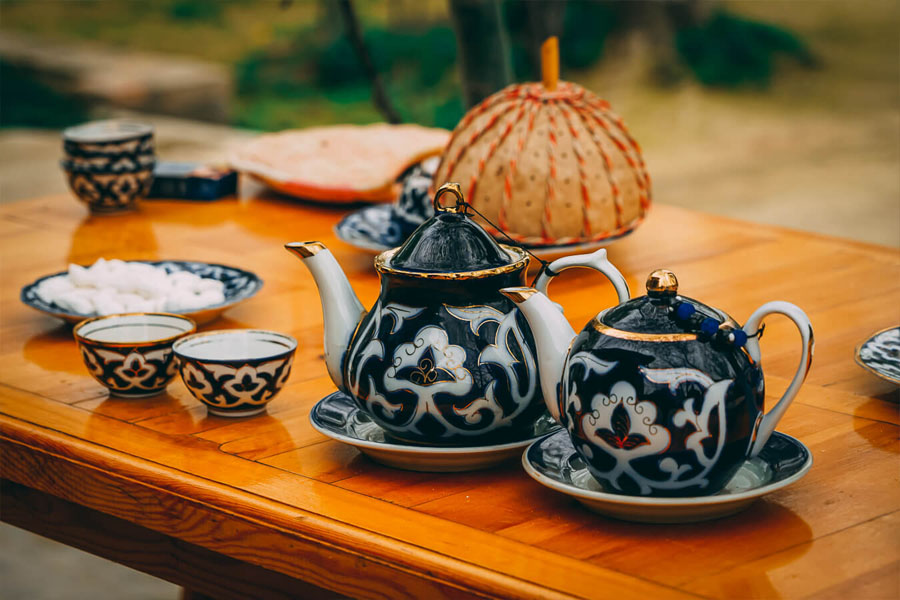
Uzbek tea drinking also has its own peculiarities and canons.
Brew should be put in a warm teapot. Then teapot is filled with boiled water up to half and is held over steam. After the teapot is filled up to ¾ of volume and in 2-3 minutes up to the brim. The hospitable host brews himself pours in piala and gives to guests. Traditionally: the more guest is esteemed, the less tea is poured in his piala. According to tradition a tea is poured from the teapot (that has just been filled with boiling water to brew) into the cup (piala) and returned to the teapot at least three times. The first returning is called “loy”, the second “moy” and only after the third time it becomes “choy” or tea. Tea should always be drunk while it is hot. Only in this way it is believed that the full aroma and flavor of the tea emerge.
Uzbekistan holds one of the highest levels of tea consumption per capita in the world – 2.65 kg per capita annually. By comparison, in Japan consumption is 680 grams and in the USA, 430 grams.
Explore the local food markets of Uzbekistan and discover unknown hot spots on an amazing cultural tour. Learn the history of the open markets and taste a variety of tasty treasures. We specialize in designing unforgettable trips based on your individual interests and travel styles.