+998 91 555 0089
[email protected]

Arba or arava – horse or donkey cart, which was used as the main type of transport until the middle of the 20th century in Central Asia. The word “arava” is of Arab origin, which means “moving.” The driver of the arba is called arbakesh.
Unlike a four-wheeled cart named “telega”, there are 2 wheels in Arba. Accordingly, the weight of the cargo on the arba increases if it is pulled by a camel – up to 1 ton, or decreases to one-third of a ton – if a donkey is involved in the work. Arbas – vans are decorated from the inside, upholstered in silk, satin, carpeted, kurpa – blankets and balish – round pillows. This is the first and easiest type of transport, the emergence of which is associated with the development of cattle breeding, agriculture and folk craft.
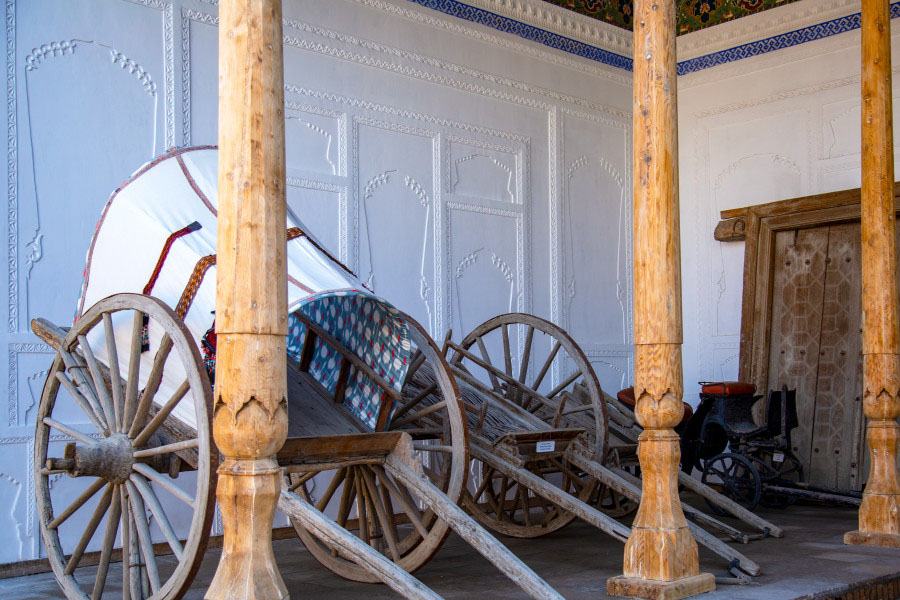
It is believed that in Central Asia, the arba appeared in the 1st millennium BC. More than 140 rock paintings of chariots and carts were found in Central Asia. In particular, in Uzbekistan, in the ruins of the ancient city Altintepa was found a four-wheel arba made of ceramic (IV-II millennium BC), a two-wheel arba made of cast gold on the banks of the Amu Darya river (IV-II centuries BC ). Arba was widely used as the main type of transport on the Great Silk Road for transporting various goods for trade. In the work of “Boburnoma” it is mentioned that the arba was used as a defensive weapon during the battles.
In antiquity, 2 types of arba were known: Khorezm or Kashgar, and the second Kokand. Judging by the findings of the so-called Amu-Darya treasure, the first type was more ancient.
In the first type, a man sits in the arba and rules the reins, in the second case he sits on the scruff of the horse, putting his legs on the ends of the shafts, and rules a short riding bridle.
Nowadays there are two types of arba left – Pitnak arava, which is made and used only in the Khorezm region, and Kukon arava – which is common throughout Asia. The difference and advantages of the Kokand arba from others is in the large diameter of its wheels. Accordingly, its speed is one and a half to two times higher than that of others. Stability is also many times better, the arba will not fall off, will not roll over under any wind, on any worst road, with any potholes and bumps, and even with a slope of 45 – 50 degrees. It will pass through any off-road, and also cross any shallow water, aryk, pit. Arba does not get stuck on a spring or autumn slushy road, which is without paved asphalt. The passage through the water will also be successful if the water moves across the chest – it will cross.
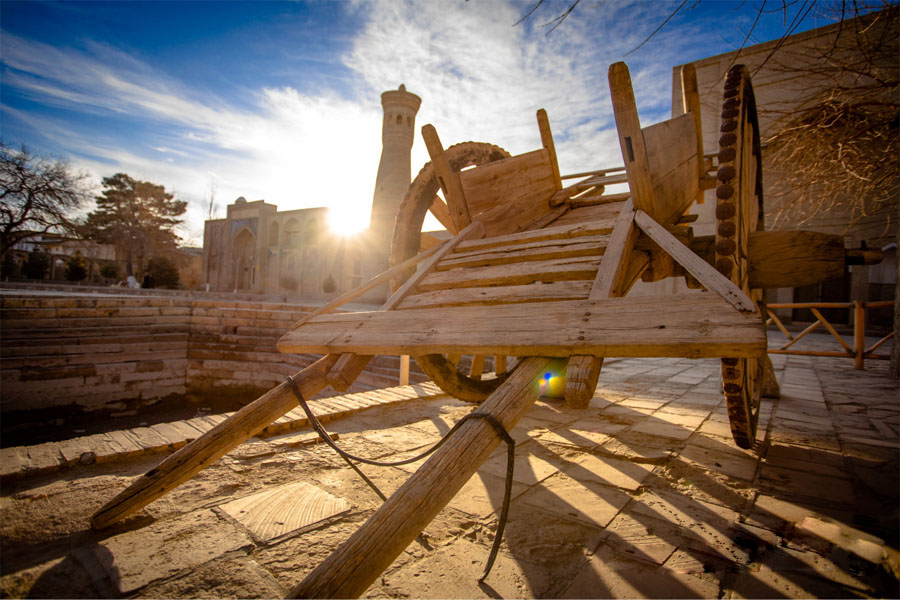
The first mention of Kukon Arava – Kokand arba dates back to the early 18th century. The book “Afzal ut-tavorikh” tells how Khan Abdurakhim, having gathered all the Kokand masters – aravasozes, ordered urgently to make fast, strong, easily passing obstacles to the arbas for going to Samarkand. For a whole year, they struggled to fulfill the highest decree of the master under the leadership of Usta Mukhitdin and came up with it. When they rolled their brainchild to the show, everyone, including the khan, made fun of them: what kind of a monster they built with huge wheels with human height. But at the competitions, their arba went around all the others, easily overcame the sands and water. Arba earned high praise, and the masters were generously awarded. There is also a written certificate of 1742, where the Kalmyk khan Nomin Rabdan receives 4 kukon arava as a gift from the Kokand khan.
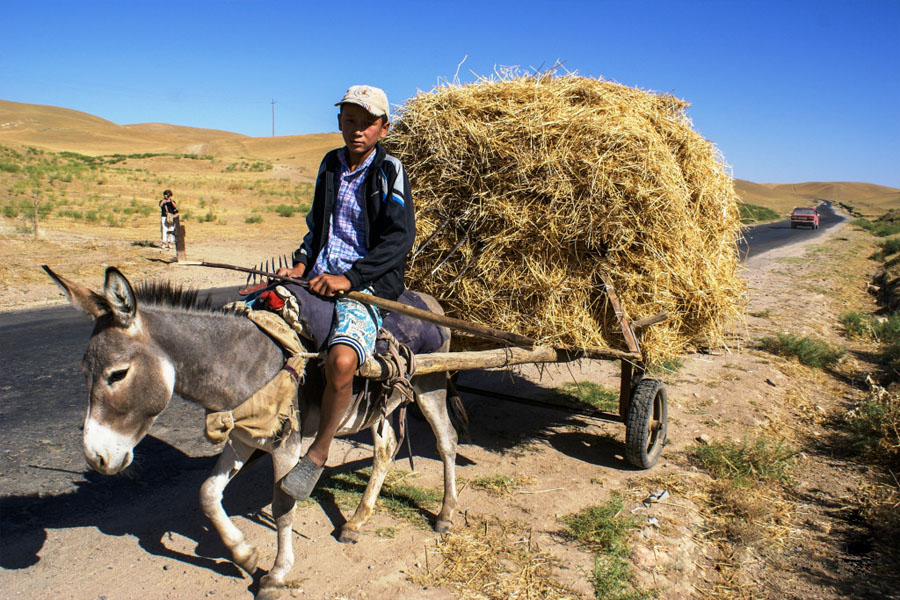
In many villages of Central Asia, Arba is still used as a means of transportation and the transportation of goods.
If you want to see it all, we invite you to an amazing tour through Central Asia.